Case Studies · 8 Sept 2026
Case Study: Great Yellow & Treeconomy
Unlocking Financeable Hectares Across the UK with Landscape-Scale Eligibility Screening
By Carolina Amu Trujillo

Executive summary
Partner: Great Yellow
Location: UK-wide nature recovery portfolio
Standard: Woodland Carbon Code (WCC)
Technology deployed: Treeconomy’s Due Diligence (DD) Tool
The mission: Help Great Yellow screen Woodland Carbon Code eligibility across its nature financing portfolio early enough to inform the natural capital strategy, building a clearer picture upfront of what a site can offer across stacked revenue streams (carbon, BNG, water) to demonstrate a high level business case to landowners and project developers.
A triangle built for scale
Great Yellow exists to drive regenerative land-use transformation at scale by connecting land management, investment, and outcome buyers into a single, integrated framework. The organisation has expanded rapidly (growing from eight to nearly fifty people in under two years) driven by three operational pillars: Nature Projects (natural capital strategy), Capital (investor financing), and Trade (selling verified ecosystem outcomes).
To power the early scoping phase of this model across its UK portfolio, Great Yellow established a formal commercial partnership with Treeconomy to license our Due Diligence (DD) Tool. Since then, automated spatial screening has become a core fixture of how their Nature Projects team evaluates site potential. To understand what that integration looks like in practice, we sat down with Caitlin Ciceri, Natural Capital Programme Strategy Manager at Great Yellow and who is currently using the tool most closely to explore how geospatial due diligence is shaping her daily workflow and broader strategy.
Caitlin sits directly at the intersection of where ecological ambition meets financial reality. Her role is to take holistic restoration plans designed by internal ecologists and identify what can be monetised to build a bankable, investor-ready natural capital strategy:
"Part of my job is to figure out what is monetisable from an ecological plan, taking what ecologists have created in terms of a restoration strategy for a landscape and turning that into a business case for accessing different natural capital markets."
To bridge this gap between restoration design and investment modeling, Great Yellow integrated Treeconomy’s Due Diligence (DD) Tool into its core workflow to assess Woodland Carbon Code eligibility across whole landscapes.
The Challenge: Screening Too Late to Matter
Before adopting the DD Tool, Woodland Carbon Code eligibility was assessed late in a project lifecycle, only after the ecological strategy and planting plans were already fixed. Eligibility was a box to check against a plan that had already been decided, rather than a strategic input into designing that plan in the first place.
As Caitlin explains, this sequencing created significant blind spots:
"Before using the tool, we would really just be assessing Woodland Carbon Code eligibility much later in the project life cycle, once the planting plans were already set in place. The problem with that is we would lose potential woodland planting areas that would be eligible for something like the Woodland Carbon Code, simply because we didn’t have a tool to assess the eligibility of the entire landscape."
This approach carried a tangible cost. Eligible hectares went unnoticed because whole landscapes were rarely screened upfront. Furthermore, confirming eligibility required contracting third-party specialists to manually run site assessments, introducing financial friction and operational delays.
"We would contract external consultants who were versed in the Woodland Carbon Code calculator to run eligibility and carbon curve assessments on the parcels we’d already decided on. So it was also a money thing, we’d be outsourcing that work."
The Solution: Screening Landscapes Before the Plan Is Fixed
With the DD Tool, Great Yellow now screens Woodland Carbon Code eligibility across a landscape at the outset, before the planting plan is fixed, not after. On one 150,000-hectare project, the team had already identified around 1,800 hectares of planned tree planting. Caitlin used the DD Tool to confirm how much of that plan was actually WCC-eligible.
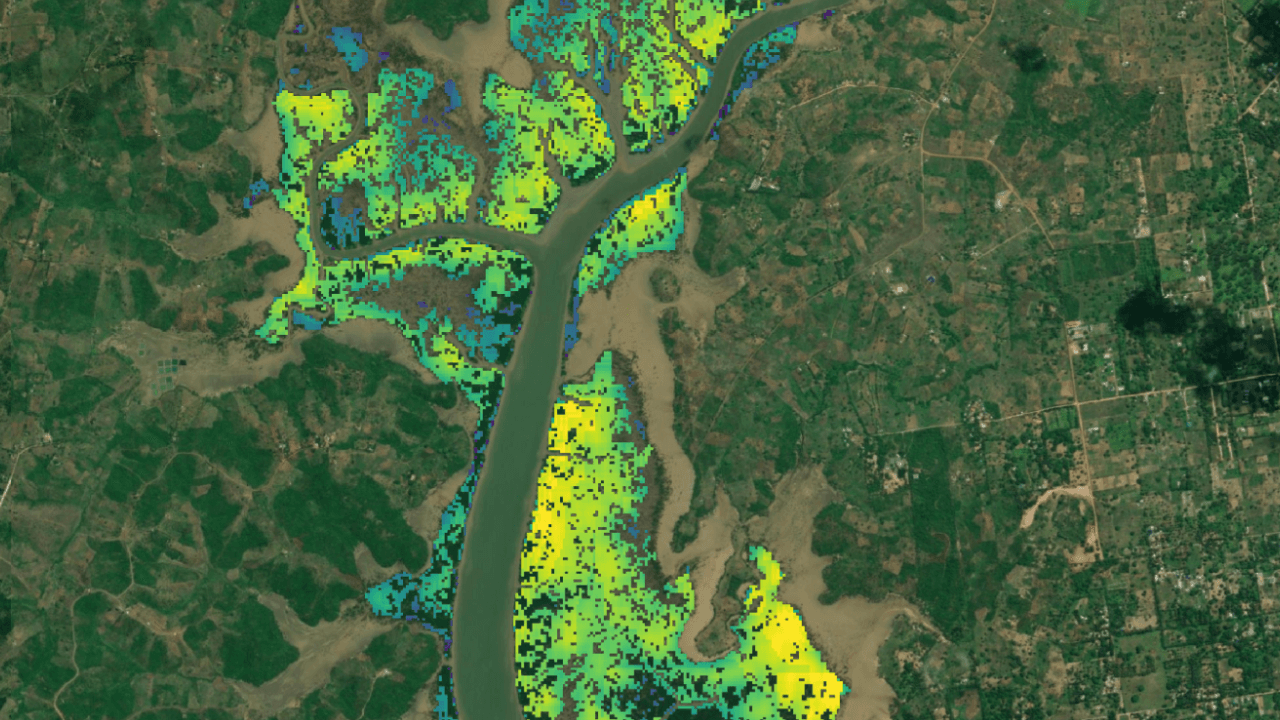
"I put the GIS shapefiles into the DD tool and found that the landscape was actually 70% eligible for Woodland Carbon Code. So the opportunity for planting was much more than they had initially identified."

This early vantage point has transformed how Great Yellow supports its clients. Rather than rubber-stamping completed plans, Caitlin’s team can actively advise landowners and ecologists early in the process, pointing out where planting is both carbon-eligible and ecologically appropriate.
"With the DD tool, we’re able to support projects much earlier in their life cycle, actually influencing the ecological strategy from the start so we can maximise project financing while also doing what’s best for the landscape."

Day to day, three features of the tool do most of the work for her: the eligibility map, the red-amber-green flagging, and a summary view of the percentage of eligible land.
"For me, it’s the map and how it shows the eligibility versus the ineligibility. I also like the traffic light system, it shows any flags, or things that are in green, which I find quite useful. And I enjoy the pie chart which shows the percentage of eligible land; I think that’s quite helpful too."

The Impact
1. More financeable hectares, without ecological compromise
By screening a landscape before its ecological strategy is finalised, Great Yellow can identify additional eligible hectares across its pipeline that may otherwise have gone unrecognised, expanding the revenue generating footprint of a project while remaining true to what’s ecologically right for the site. The DD Tool also works the other way: flagging land that appears plantable but isn’t eligible (recently forested land, or land near archaeological sites, for example) so that Great Yellow’s projects avoid wasting time and money developing parcels that cannot qualify under the Woodland Carbon Code.
2. Winning client confidence through visual evidence
For Caitlin, much of her role is translating what natural capital markets mean for a specific landscape to clients and landholders who are new to the concept. The DD Tool’s eligibility maps have become central to that conversation.
"What I’ve found clients respond to the most in presentations are the maps with the eligibility mapped on. A lot of people are quite visual, and it helps them understand what they could potentially monetise in a more concrete way. It moves the needle in a lot of conversations, it makes carbon financing feel specific to their project, rather than an abstract market trend."

3. Efficient execution backed by close technical partnership
Replacing manual external consultancy with Treeconomy’s platform has reduced cost, cut friction, and sped up deal readiness. Just as importantly, Great Yellow benefits from dedicated technical support to help navigate complex spatial findings whenever needed.
Looking ahead: expanding beyond woodland carbon
Great Yellow’s pipeline spans carbon, biodiversity, and water markets. While the current DD Tool centers heavily on the Woodland Carbon Code, the UK market’s strong focus on peatland and soil restoration presents clear opportunities for broader scope. Treeconomy is working closely with Great Yellow to understand the needs, using that input to help guide how the DD Tool’s screening capabilities expand across additional land-based standards.
"We’re working (with Treeconomy) to expand what the tool can do, because Great Yellow works not just in the carbon markets, but in other markets too. Figuring out how to assess eligibility beyond the Woodland Carbon Code would be really beneficial to my work."
For Caitlin, the combination of intuitive technology and collaborative support makes a clear case for natural capital managers:
"I would say the DD tool is absolutely worth it, especially when you’re doing initial scoping exercises and supporting a project’s ecological strategy. I would definitely recommend it to any natural capital team looking for an eligibility assessment, and a good partner to work with."
Ready to Screen Your Pipeline for Hidden Opportunities?
Great Yellow’s experience shows how evaluating eligibility across whole landscapes early instead of late and parcel by parcel, unlocks financeable opportunity while preserving ecological integrity. Whether you are managing land portfolios or developing projects, Treeconomy provides the geospatial technology, technical rigor, and technical support required to scale nature recovery with confidence.